
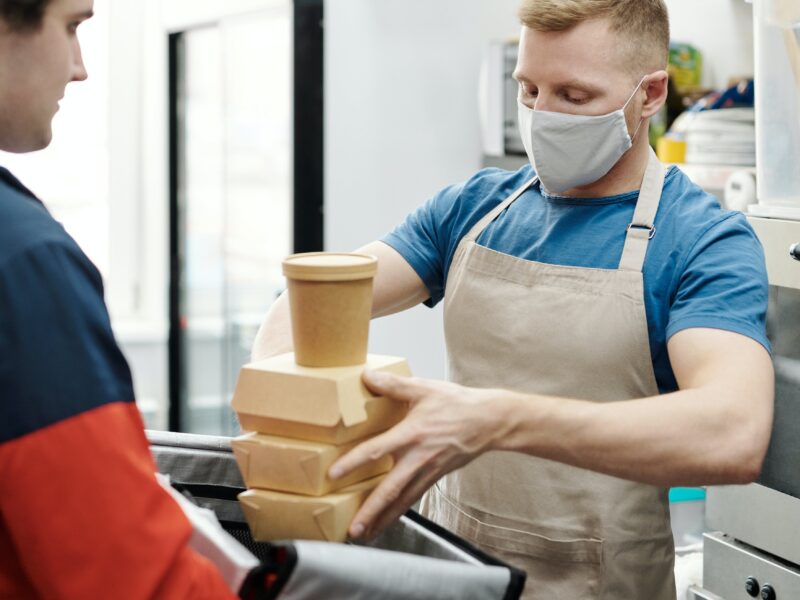
Dishes heavy in fat or oil, such as fried foods, baked goods, and snacks, are frequently packaged in greaseproof paper bags. They can also be used to package non-food things like cosmetics or art supplies that could be easily stained.
Greaseproof bags are a practical and hygienic choice for packing and transporting a range of things since they can keep the contents fresh and prevent them from becoming greasy or oily.
What are greaseproof paper bags?
Paper that has been coated with a material, such as wax or polyethylene, that prevents the paper from absorbing oils and fats is used to manufacture greaseproof paper bags. Because they prevent food from seeping through the bag and creating a mess, they are ideal for packing fatty or oily food products, such as fried dishes or baked goods. For takeaway orders, greaseproof paper bags are also often used in the food service sector.
Is greaseproof paper bag recyclable?
Because greaseproof paper is coated with a material like wax or polyethylene that prevents it from absorbing oils and fats, it is often not recyclable. Due to the coating’s potential to interfere with the paper’s fibres and hinder appropriate separation and processing, recycling facilities find it challenging to deal with these coatings.
Additionally, during the recycling process, the grease and oil residue on the paper may contaminate other recyclable materials. This may result in problems with the recycling machinery or a decline in the quality of the other recyclable materials. Therefore, greaseproof paper is frequently found in landfills and is typically regarded as a waste element.
Are wax paper and greaseproof paper the same?
No, greaseproof paper and wax paper are not the same. Both are made from paper, but they have different properties and uses. Wax paper is paper that has been coated with wax, which makes it resistant to moisture. This makes it useful for a variety of tasks, such as wrapping food to prevent it from drying out, lining baking pans to prevent sticking, and using as a non-stick surface for baking and cooking.
Greaseproof paper, on the other hand, is paper that has been coated with a substance, such as wax or polyethylene, that makes it resistant to the absorption of oils and fats. This makes it useful for packaging greasy or oily food items, such as fried foods or baked goods, as they help to prevent the food from leaking through the bag and making a mess. In short, wax paper is mostly used in cooking and food prep, while greaseproof paper is used for packaging and holding greasy food items.
Does a greaseproof paper bag have an environmental impact?
Does the fact that the majority of greaseproof paper brands cannot be recycled imply that all baking paper is unsustainable? No, not always.
H-Pack’s greaseproof paper is made from 100% recyclable paper, which is made entirely from previously used paper materials that have been collected, processed, and then re-pulped to create new paper. This type of greaseproof paper can be made by applying a coating to the surface of recycled paper. The coating is frequently made of natural wax or biodegradable and compostable polymers that provide grease resistance.
This type of greaseproof paper can be considered as more environmentally friendly than paper made from virgin pulp, as it uses less energy and resources, and also eliminates the need for cutting down trees. It’s important to note that as with any product, the environmental impact of the greaseproof paper bags depend also on the sourcing and production methods, transportation, and disposal.
It’s important to ensure that the paper is sourced sustainably and that the production process is done in an environmentally friendly way. Also, the recycling process has to consider the grease and oil resistance coating on the paper, which may have some limitations to the recycling process.
Get an unbeatable quote from info@1sourcecateringsupply.com or WhatsApp 0086 13424794288